 Property Week News, analysis, insight and events for UK property professionals
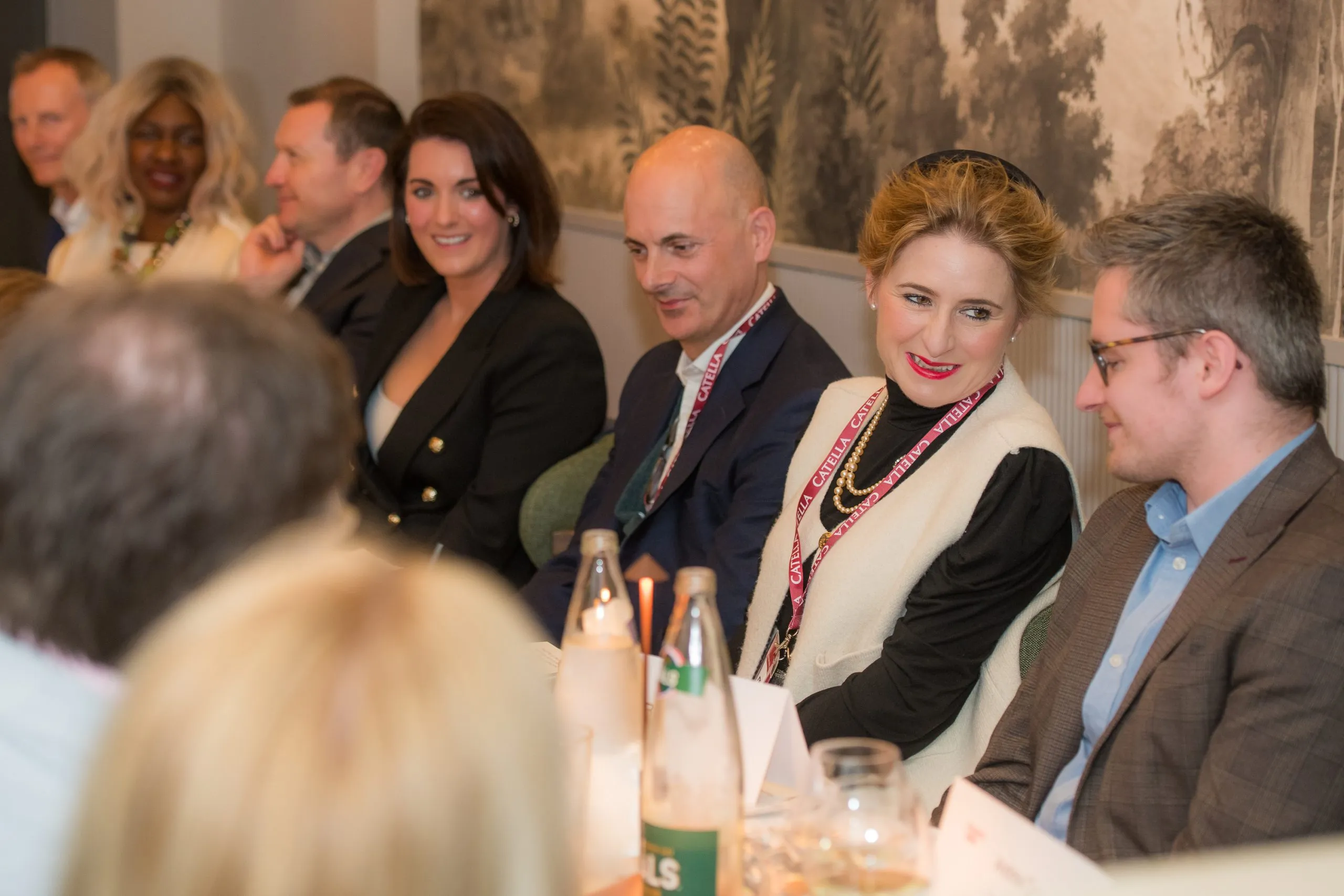
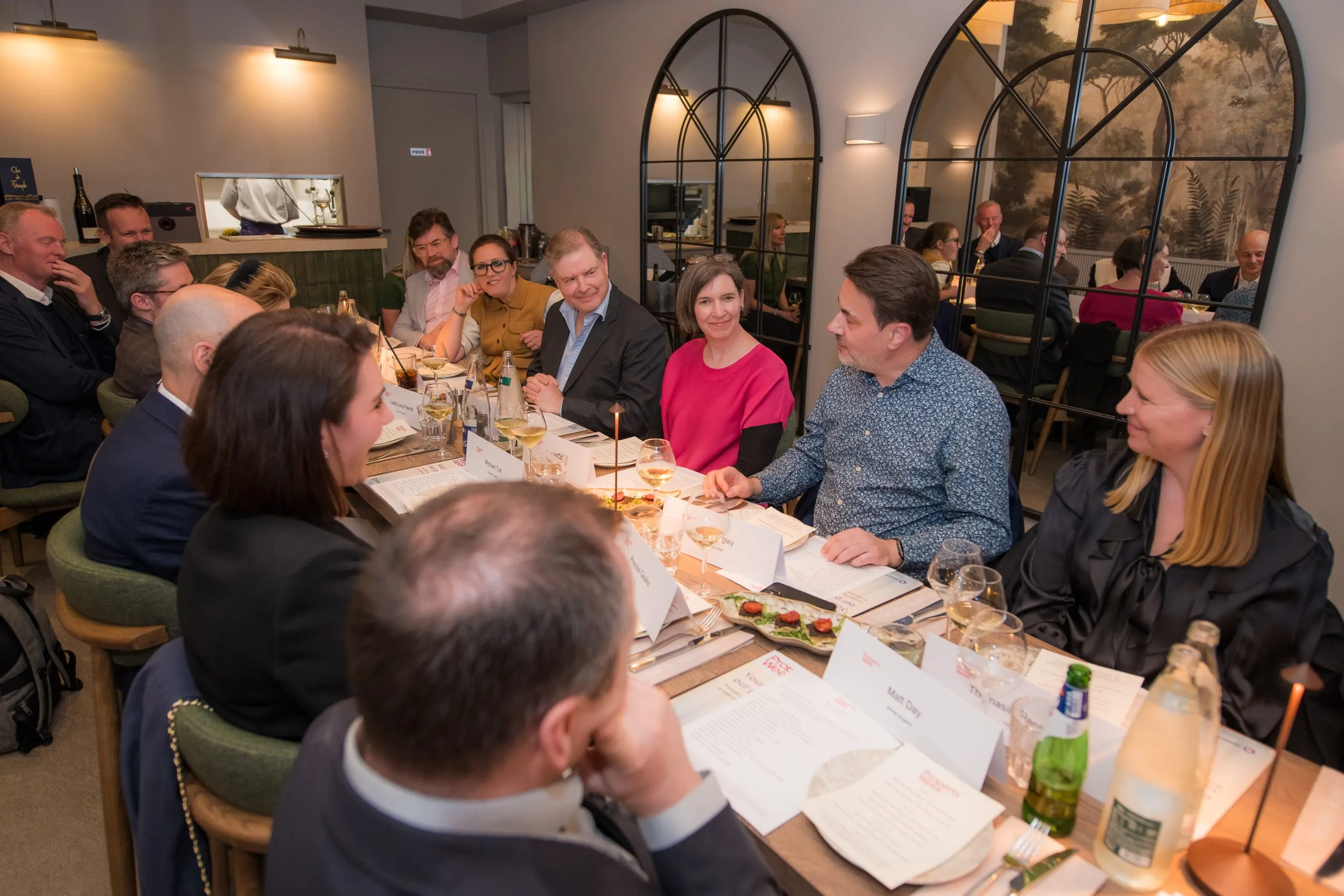
The Wednesday evening of this year’s Mipim conference in Cannes, France, saw a group of leaders from across the real estate industry gathered for an engrossing dinner discussion hosted by Property Week editor Lem Bingley.

Guests
- Jude Barber, director, Collective Architecture
- Jamie Bergin, commercial director, Catalyst Group
- Sean Crosby, managing director, finance, Canary Wharf Group
- Matt Day, associate director, equity and partnerships, Homes England
- Andrew Dickman, chair, Tritax Big Box Developments
- Susan Freeman, partner, Mishcon de Reya
- Lady Lucy French, chief executive, Fleet Street Quarter
- Phoebe Geake, UK industrial and logistics agency lead, JLL
- Chenai Gondo, chief executive, RealService
- David Inskip, EMEA head of research, CBRE Investment Management
- Louise Ioannou, head of workspace, HB Reavis
- Nicholas Maclean, president, RICS
- Samantha McClary, chief executive, British Council for Offices
- Thomasin Renshaw, managing director, Greystar
- Michael Toft, co-head of real estate investment and head of care homes, Octopus Capital
- Gavin Winbanks, founder, White Hawk Green
- Justin Young, chief executive, RICS
- Lem Bingley, editor, Property Week
- Jamie Bennett-Ness, news editor, Property Week
The discussion was both reflective and forward-looking, with topics ranging from the conflict in the Middle East to the industry’s diversity challenges and the widespread impact of technology, from artificial intelligence to quantum computing.
Attendees were asked to share something they had recently learned that had surprised, enchanted or made them think differently. Here’s what they had to say.
Shared sentiment
Spirits were lifted by the weather in Cannes, with delegates enjoying a sunshine-filled few days of networking, despite the geopolitical clouds hanging over the sector.
The impact of the war in Iran, which entered its third week as delegates gathered, featured regularly in conversation but did not appear to dent positive sentiment.
“There’s a genuine feeling of ‘what’s going to happen?’ over what’s going on in the Middle East and beyond,” said Sean Crosby, managing director, finance, at Canary Wharf Group. “Talking to lenders and creditors, people have still been very positive. They’ve seemed willing to still lend and be quite active in the market, which I think is encouraging.”
Positive knock-on effects of the ongoing geopolitical uncertainty could also be identified, especially with both political and business leaders from across Europe mixing at Mipim, as RICS president Nicholas Maclean pointed out. His takeaway from a number of roundtables featuring European developers, REITs and more was that “there is a level of positivity I certainly didn’t hear last year”.
 He added: “It’s a positivity that seems to me to be driven by the US. There’s a realisation in Europe at the moment that we Europeans – and I include the British in that – have to be more independently minded and take the initiative, whether that be on sustainability or attracting inbound capital from places like the Gulf or elsewhere.
“I think there has been a catalyst, particularly with the events of the last few days [in Iran], that has driven Europe to start making some decisions that it might have put off over the past few years.”
Samantha McClary, chief executive of the British Council for Offices, said the industry’s response to the conflict reflected its essential nature. “We are an industry that is led by sentiment. The conversation has been upbeat and the thing I’ve been reminded of is how much sentiment among real estate professionals can be impacted by the weather.
“Half of me thinks that is a really good thing, as we do need that sentiment to drive the industry forward, but half of me worries we might sometimes bury our heads in the sand.”
As well as the conflict, a unifying theme of the discussion was the need to find common ground, with collaboration across sectors and borders seen as a key opportunity at Mipim, according to Lady Lucy French, chief executive of Fleet Street Quarter.
“I was at the Turkey stand to see a roundtable with people from around the world talking about regeneration and urban planning, and the takeaway was how we can all learn from each other,” she said.
 Susan Freeman, partner at Mishcon de Reya, echoed this sentiment. “I was at the Rome stand and they were discussing their stadium, attracting investment and collaboration between the public and private sectors. So the same topics we’re discussing are being talked about in a similar way on all the other city stands.”
Maclean agreed, adding: “Here, I’ve sat with the governments of Monaco, Greece, Romania and Italy, and there is no such thing as a single-country crisis. Every conversation around housing is exactly the same, and emerged markets to emerging all have the same conundrums around affordability and viability. I haven’t heard the answer [to these problems] yet, but I’d like to reassure people that their pain is being shared.”
Tech talks
With a wave of technological advancements sweeping across the industry, a key feature of the conference was firms both showcasing current innovations and predicting what is around the corner.
Quantum computing is one development that might still be on the horizon, but its potential impact is already being discussed by the industry and the government alike.
“To put [the potential impact of quantum computing] into context, for example using it to understand a logistics supply chain, a normal computer can analyse everything up to 100 properties or 100 nodes,” explained Phoebe Geake, JLL’s UK industrial and logistics agency lead. “When it gets to over 100 nodes, it will take [hundreds of] years to work out the real-time impact of something like the conflict in the Middle East on those properties. A quantum computer will solve that in six seconds.”
She added: “That is something we are all going to need to get our heads around in terms of where technology is going to lead the industry. Understanding that could work as a real advantage, but there will also be some people that this makes nervous.”
Louise Ioannou, head of workspace at HB Reavis, noted that one way the industry could improve its adoption of new technologies is to be prepared to adopt Silicon Valley’s mantra: ‘fail more and fail faster’.
“We as an industry are not used to failing fast, pivoting and making changes to our decision-making,” she said. “Perhaps that is why we as an industry fall behind when it comes to adopting new technology, and I think it’s a good summary of how we could do better.”
The future is likely to be full of surprises, however. “One thing I didn’t think I’d be discussing with someone today is how [outer] space could affect our terrestrial real estate,” said Michael Toft, co-head of real estate investment and head of care homes at Octopus Capital. “If someone – Elon Musk – puts data centres into space, is that going to undermine the terrestrial value of data centres? What will it mean?”
The discussion also included reflections on gender equality within real estate and how the industry should do more to support university start-ups.
“The expression I’ve learned today is ‘the glass cliff’,” shared Justin Young, chief executive of RICS. “We’re all familiar with the glass ceiling, but the glass cliff is at the middle career point where a number of predominantly women take leave and don’t come back. It’s a very clear opportunity for us and the entire sector to work harder – not just at bringing people in at the beginning of their careers but at the mid-point as well.”
Return to form
Jamie Bergin, commercial director at Catalyst Group, said he was upbeat upon returning to Mipim for the first time in seven years, adding that it was “refreshing to be back having face-to-face conversations”.
Bergin’s main takeaway from Mipim discussions was equally positive. “A lot of my conversations here have been about dealing with the Building Safety Act. Now the act is in full action and is moving forward [with the backlog at gateway 2 easing], the [feedback] from clients is that there are better buildings as a result.
 “That is an important change: this realisation that yes, the [legislation] is a bit awkward as it is costing money and slowing things down; but actually, at the
end, the end product will be better for clients and for the people who purchase buildings.”
Gavin Winbanks, founder of White Hawk Green, shared another learning point that can be linked to the UK’s economic prosperity, one gleaned from a roundtable chaired by former housing secretary Greg Clark. “We have such an amazing story around our universities with the knowledge and innovation that’s coming out of our education system,” he said.
“And we run the risk of losing large parts of this system if we aren’t able to support [start-ups] to find ways to grow and to monetise. This needs support from the private sector.”
Winbanks added: “I think there is so much to be done there, so the question is: what more could real estate be doing to support the sector around areas like student accommodation so the universities can focus on innovation and other cool stuff?”