Property Week News, analysis, insight and events for UK property professionals
As the UK works towards the government's goal of achieving net zero emissions by 2050, the decarbonisation of transport stands as a critical pillar.

Richard Turnball, Head of Public Affairs and Commercial Partnerships, Believ
Road transport is responsible for 28% of the country’s greenhouse gas emissions, and with decades of research proving that the transition to electric vehicles (EVs) will reduce those emissions, helping and encouraging drivers to switch to EVs is a crucial part of the nation’s journey to a more sustainable future.
The government is playing its part in encouraging EV uptake: phasing out the sale of new petrol and diesel cars; and the recent, and very welcome, EV grant scheme offering drivers up to £3,750 off a new EV.
The mass adoption of EVs, however, does not solely rely on EVs becoming more affordable and readily available. Also critical is conveniently located, reliable public charging infrastructure to improve driver experience and scale alongside the increasing number of EV drivers to ensure there are sufficient charge points to meet growing demand.
The role of the property sector
And that’s where the property sector comes in. Whether it’s at petrol forecourts, drive-through eateries, retail parks or brownfield sites, landowners are helping to ensure charging infrastructure is in place to serve demand and provide others with the confidence to make the switch.
To meet the government’s ambition of reaching 300,000 public charge points by 2030, charge point operators (CPOs) will need to support property managers, landowners, businesses and local authorities to install more than 215,000 charge points in the next five years.
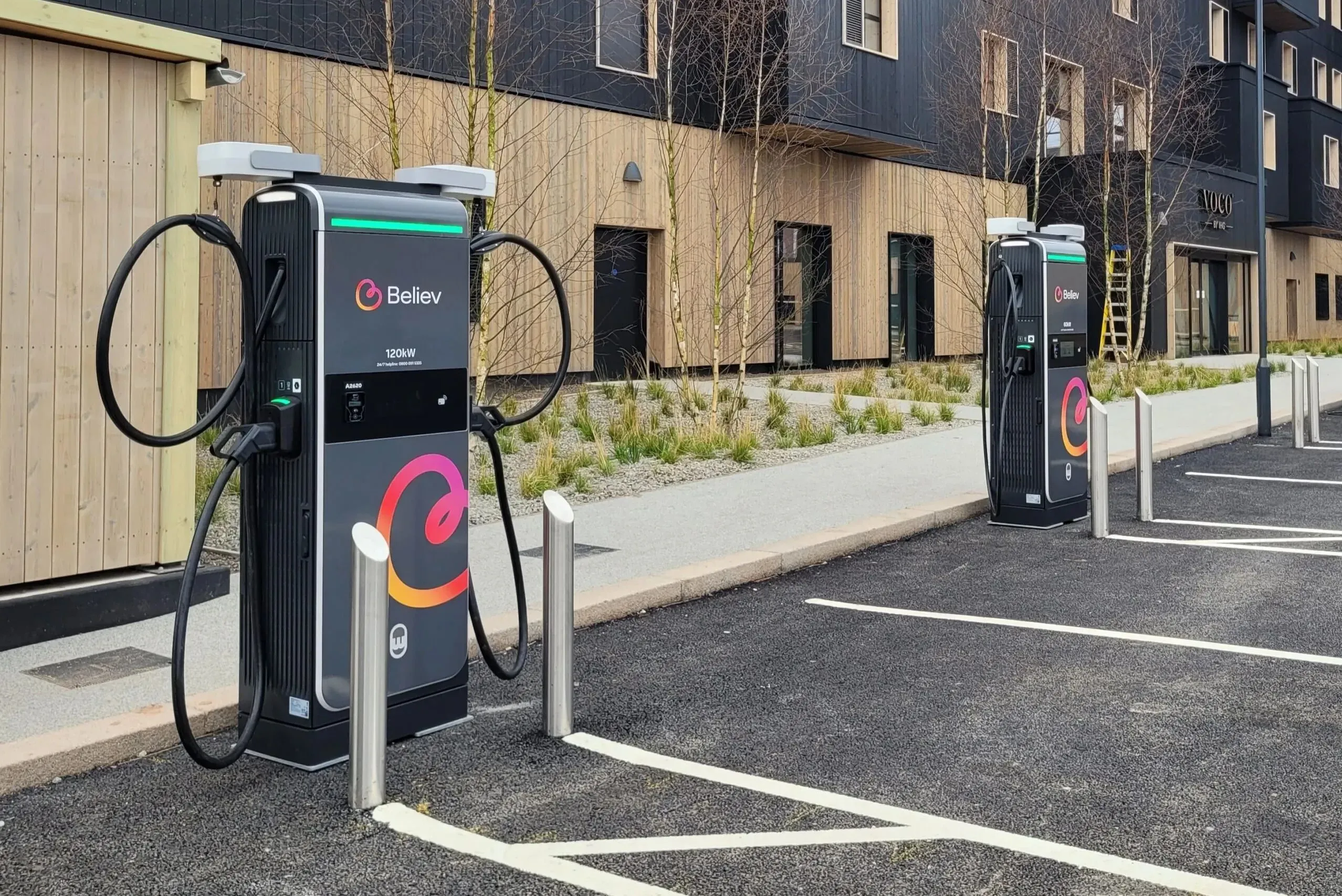 This requires significant investment and for the CPO to be financially secure enough to carry the upfront costs and ongoing operations until EV uptake hits critical mass. The challenge for the property sector is therefore discerning which CPOs have sufficient financial runway to deliver on their promises not just to install charge points, but to operate and maintain them in the long term.
The importance of financial security
For operational reliability and continuity, the financial security of a CPO is a crucial consideration. This will help to ensure that the CPO can afford to invest in both the service and maintenance of the charge points, providing long-term service availability, even during periods of lower utilisation. Financial security is also key for scalability, as robust capital reserves empower a CPO to grow its network and incorporate clean energy.
A CPO that has a strong financial position enables them to better absorb market volatility and navigate regulatory changes or shifting demand, without disrupting service. It also gives them the power to invest in the best technology available – a point especially important in such a rapidly evolving market – and offer a range of attractive host remuneration models.
Procurement best practices
So how does a business or landowner go about selecting its long-term future CPO partner? And what questions should it ask?
First, it should conduct a thorough financial check, reviewing a CPO’s ability to commit sufficient capital to the project. It should also verify the capacity to scale its delivery and the credibility of any third-party partnerships. It’s important to check that the CPO has sufficient in-house expertise to effectively support clients and deliver end-to-end solutions.
Finally, it should examine the CPO’s market position and track record, assessing its reputation, user feedback and ability to adapt to regulatory changes and technological advancements.
Delivering long-term value
Identifying and securing a partnership with a financially secure CPO requires adequate time for thorough research and due diligence. Such efforts into forging partnerships with the right CPO not only contribute to the achievement of the UK’s net zero goals; it’s also essential to delivering reliable, high-quality EV charging infrastructure that meets the growing expectations of tenants, occupiers and site users across the country.
Richard Turnball, Head of Public Affairs and Commercial Partnerships, Believ