 Property Week News, analysis, insight and events for UK property professionals
Local government reorganisation across England is one of the most significant shake-ups of council structures in a generation.

Jason Lowes is planning partner at Rapleys
Following the English Devolution White Paper, councils in a number of counties were invited to submit reorganisation plans, signalling a new wave of future mergers. The purpose? Sharing costs, resources and experience, a lack of which has held back smaller districts in particular.
District councils and local planning authorities (LPAs) that were previously the main decision-makers for most planning applications are likely to cease to exist as we know them. Their functions, local plans, planning officers and development management processes will be absorbed into new, larger councils with (as yet) undefined priorities and boundaries. So, will this reorganisation accelerate development and reshape the planning landscape?
One of the biggest failures of the current two-tier system is the disconnect between strategic decision-making and development. LPAs prepare local plans but lack wider strategic oversight; county councils have strategic responsibilities, but limited planning powers. Reorganisation could break this logjam by aligning housing allocations with transport investment, help co-ordinate strategic employment land and facilitate a joined-up approach to the review of the green belt. The creation of new mayoral combined authorities, if done well, could also reduce red tape.
The consolidation of planning functions could create more resilient planning departments
The changes could also end local political paralysis. Many, particularly smaller, district councils have resisted development. Reorganisation may break this pattern.
Those most in need of housing often live in rented accommodation, in constrained cities and urban areas, not where the most sustainable new housing sites are located. Living in a different local authority effectively disenfranchises them from decisions on the location/format of their future home.
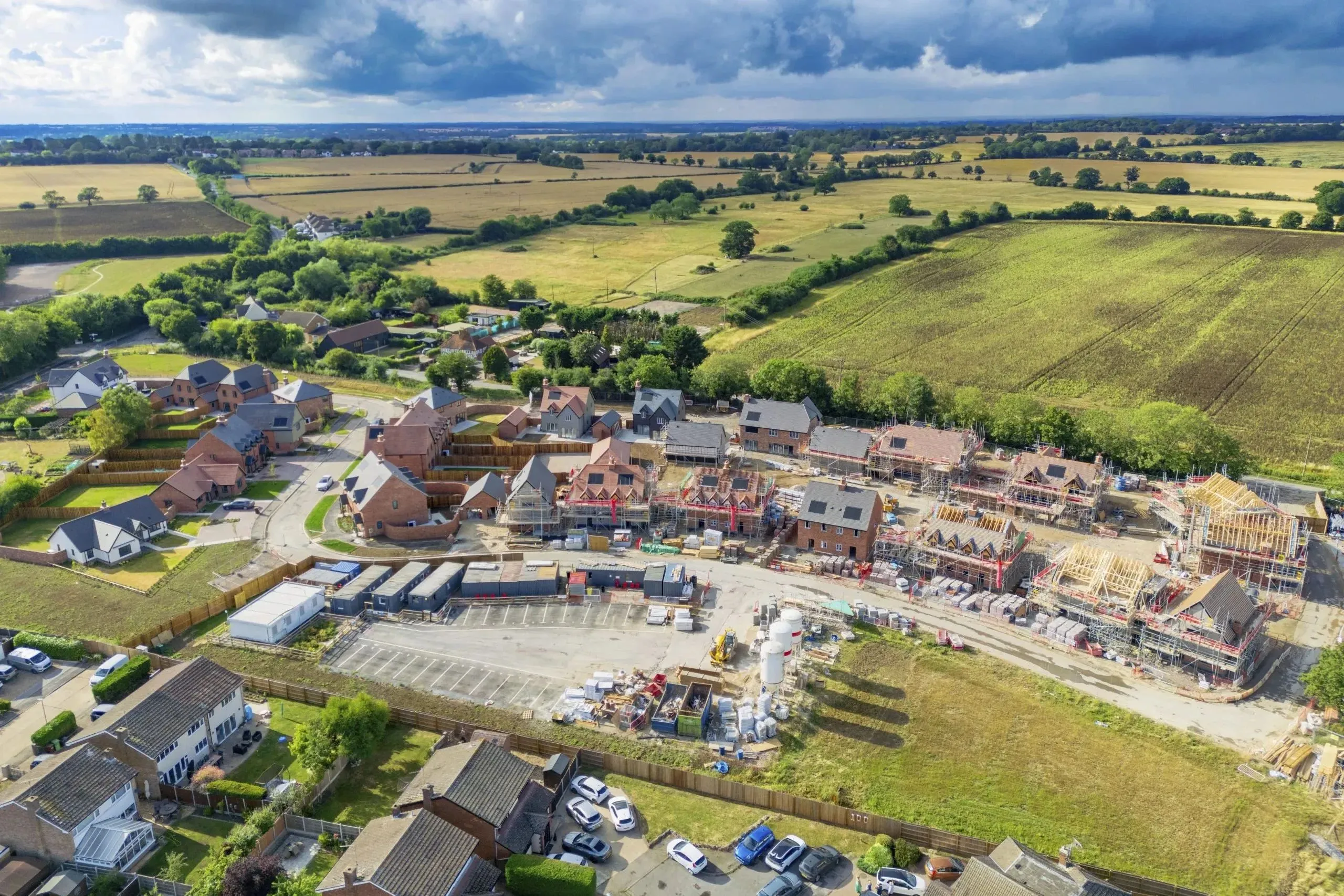
New landscape: council reorganisation means developers will need to engage with new planning authorities
Many planning departments are chronically under-resourced. Small authorities struggle to recruit/retain experienced planners, heritage officers, urban designers and specialist consultees. The consolidation of planning functions could create more resilient planning departments with genuine in-house expertise, reducing dependence on consultants and improving the speed of plan-making and the quality and consistency of decision-making.
Finally, reducing the number of LPAs could make it more cost-efficient, consistent and simple for developers to navigate the planning system, ensuring a more efficient pre-application process and faster approvals.
A brake on decision-making
On the downside, history shows policy and decision-making can slow dramatically during council mergers, with officers focusing on restructuring rather than policy and planning applications. The risk is significant disruption.
The status of adopted and emerging local plans during reorganisation is uncertain. While they may still carry legal weight, emerging ones may need rewriting. Also, district planning officers often have detailed local knowledge, understanding site histories, informal relationships with local stakeholders and individual settlements.
There is a danger of losing this local touch. While larger councils will hopefully result in more remote and objective decision-making, communities may feel planning decisions are being made by an LPA with little understanding of local context.
So, what should developers and investors do, given such uncertain outcomes? First, they should take a proactive approach, especially those with land or live projects in reorganisation areas. It is critical to understand who the new responsible authority will be and what the planning/political implications are. If a site is part of an emerging new authority, engaging early will help to build relationships before structures are finalised. Developers should seek to do this whether sites are live or in the pipeline, to help shape frameworks that actively support development.
Near-term disruption is expected, but developers that take time to understand the new geography, build relationships with new authorities and engage ahead of new local plans will be better placed to drive their schemes forward.
The new system has the potential to open up strategically critical projects and help satisfy development need, but could struggle against local politics in smaller LPAs where the active electorate prefers the status quo.
Time is of the essence and it is up to all of us involved in development to work together and actively shape the new planning landscape, not just react to it.
Jason Lowes is planning partner at Rapleys