 Property Week News, analysis, insight and events for UK property professionals
With all the mayhem that seems to be inherent to Mipim, I managed to miss an event that was very close to my heart: the inaugural screening in the Newcastle pavilion of a new documentary celebrating the 40th anniversary of the city’s quayside regeneration masterplan.

Adam Branson is a freelance journalist, writer and editor
The masterplan was produced by local lad, architect and planner Terry Farrell, who sadly died in September last year, and was instrumental in turning around the fortunes of the Tyne on both sides of the river. At least two interviewees in the film note that the quayside in the 1980s was “a no-go zone”.
That’s no longer the case. Today, the quayside is frequently cited as one of the best examples of urban regeneration in Europe.
As Terry’s son Max puts it: “From the outset it was genuinely mixed-use, with hotels, restaurants, offices, homes, retail and leisure, alongside some of the highest-quality public realm and public art anywhere in the country, possibly the world.”
By the time I was a teenager, the plan was starting to work. At that point, the quayside certainly was not a no-go zone. Rather, it was a rapidly evolving bar and restaurant district that played host to some of my more hedonistic nights out. The triptych of the Sage (now Glasshouse) music centre, Baltic Centre for Contemporary Art and Millennium Bridge were on their way.
Enlightened leaders know that regeneration is as much about people as it is place
Full disclosure: my uncle played a pivotal role in the delivery of the Sage, Baltic and Millennium Bridge. He was the person BBC Look North would interview in all weather conditions on top of the former flour mill that would become the Baltic. I have happy memories of drinking wine with him in his flat overlooking the quayside as it changed before our eyes. It’s why I write about what I do, all these years later.
Of course, regeneration is not something that just happens. City leaders need to think constantly and consistently about the next piece of the puzzle and how they can invest in the talent of the future to make it happen. Enlightened leaders know that regeneration is as much about people as it is place.
Gaining understanding
It therefore felt appropriate that the day after finally catching the documentary at the Farrell Centre last week, I joined a group of 16- to 18-year-olds on a study tour of the Byker estate (yes, of Grove fame, for those of us old enough to remember the 1990s children’s TV show that introduced Ant and Dec to the world).
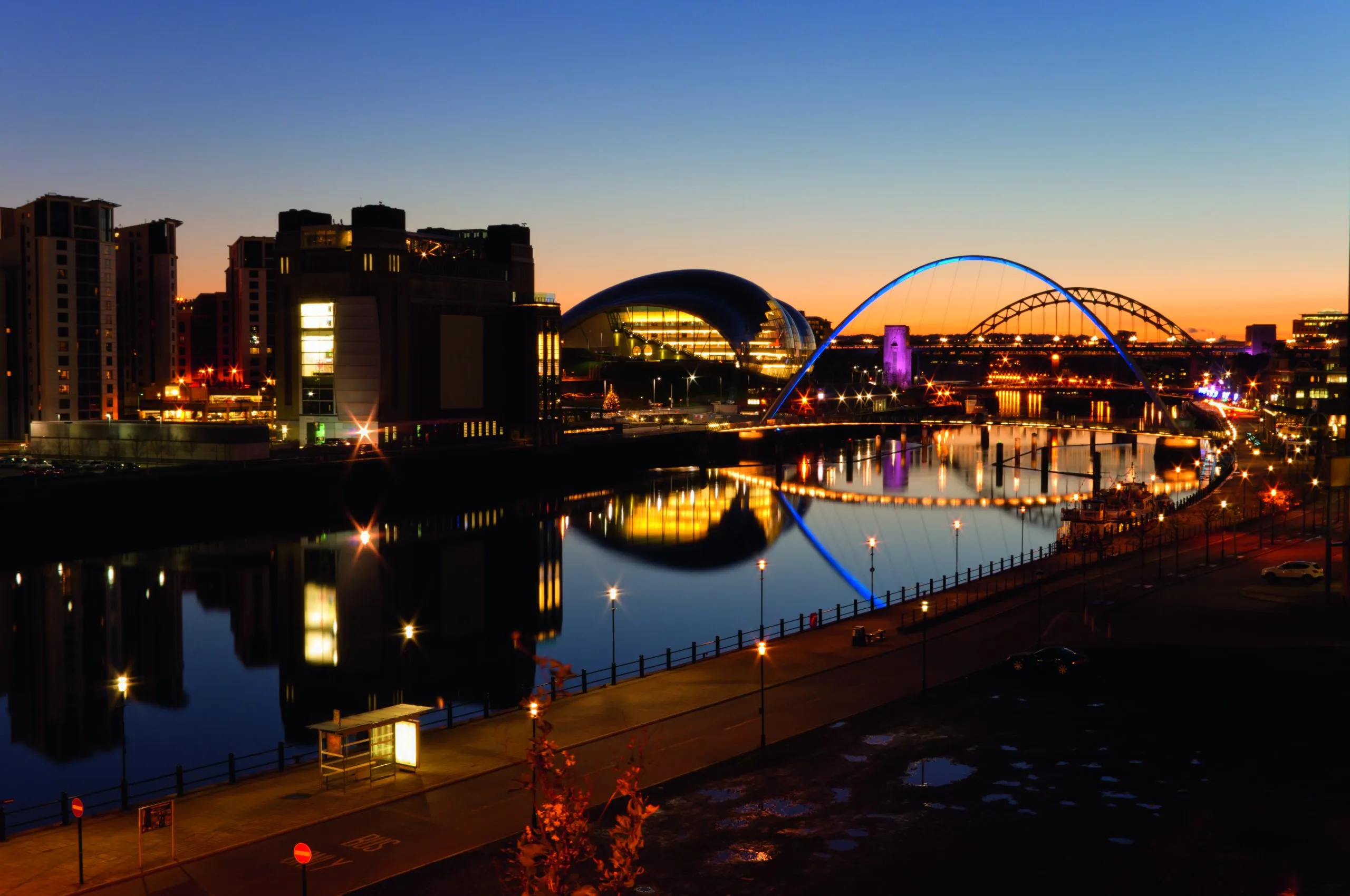
Culture capital: the Glasshouse music centre is just one of many arts ventures now based in Newcastle
The visit was part of a week-long programme organised by Regeneration Brainery, the national social mobility not-for-profit organisation, and was, frankly, inspiring.
The students were attentive, infinitely polite and clearly whip-smart. In an initial introduction at Karbon Homes’ offices on the estate, not a single one of them had their phone out. Mipim delegates could learn a thing or two from that – it is an industry joke that doomscrolling through a seminar in Le Palais des Festivals can count as CPD.
During the tour itself, I fell into conversation with a college student and a local architect who had also joined the tour. The student was considering his options for the future and struggling to choose between architecture and engineering.
He was highly articulate and asked the architect interesting questions, clearing wanting to understand the built environment as a whole before committing himself to any single career path.
If the Byker visit was anything to go by, he will have gained that understanding, not just when it comes to white-collar disciplines like architecture and engineering, but everything from bricklaying to financial management. The whole point of Regeneration Brainery is inclusivity. And that, of course, is as it should be – everyone is invested in the future prosperity of our cities.
Adam Branson is a freelance journalist, writer and editor