Property Week News, analysis, insight and events for UK property professionals
A week before Rachel Reeves’ Autumn Budget, industry experts at Property Week and Rightmove Commercial’s roundtable found many reasons to be cheerful about London’s commercial markets, particularly offices and hotels.
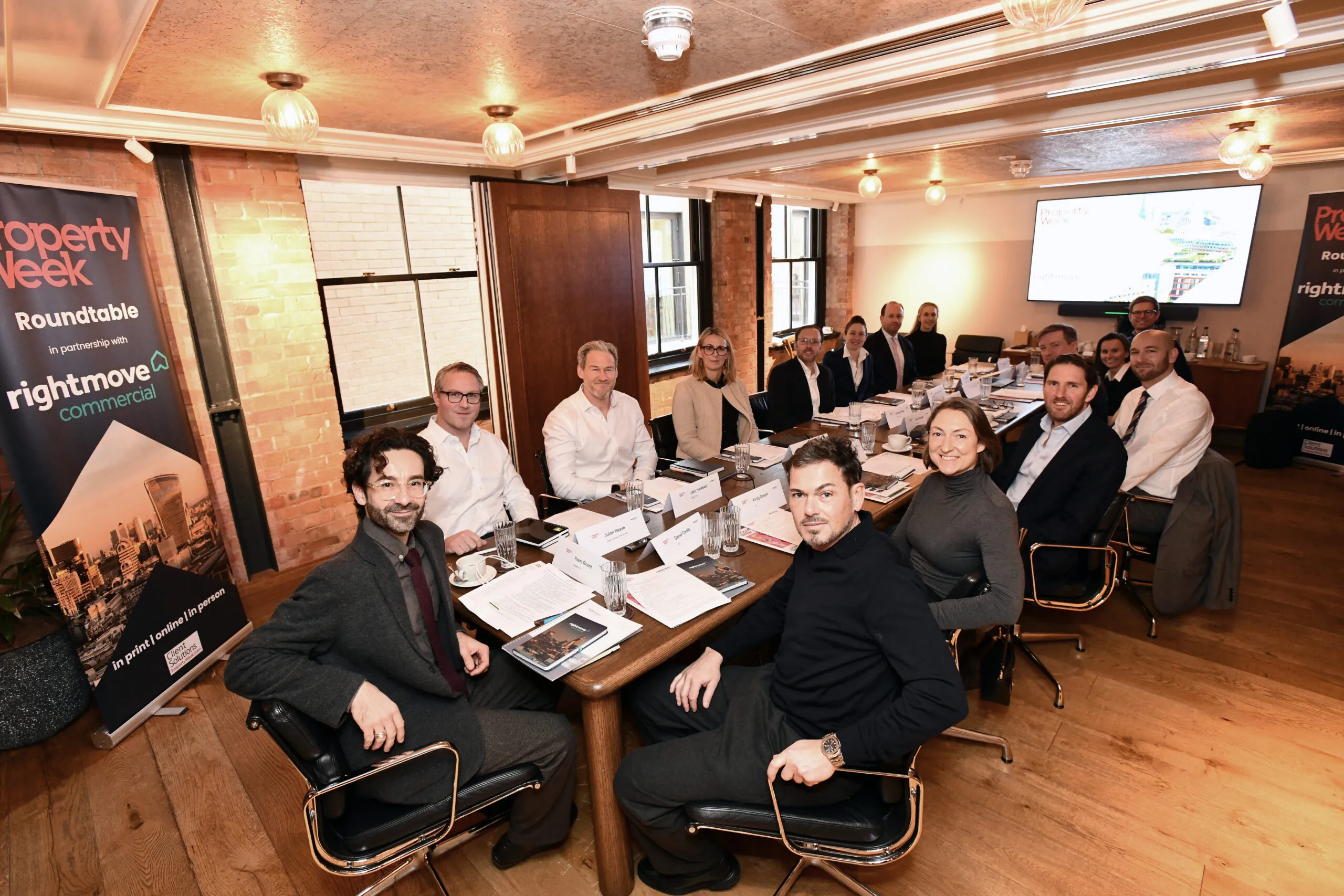
The panel of experts
- Daniel Castle, principal, LDG
- Kirsty Draper, head of sustainability – UK agency, JLL
- Jake Halstead, partner, Ingleby Trice
- Natalie Lelliott, founder, TLG London
- Andy Miles, managing director, Rightmove Commercial
- Elaine Murphy, senior director, head of occupier strategy, BNP Paribas Real Estate
- Julian Neave, director, real estate investment, Ontario Teachers’ Pension Plan
- Toby Pentecost, senior vice-president and co-head of UK offices, Trammell Crow Company
- Christopher Pilgrim, principal, managing director and head of UK capital markets, Avison Young
- Pierre Ricord, head of hotels consultancy, Christie & Co
- Geoff Scodie, head of city asset management, British Land
- Belinda Swinnerton, area director, Rightmove Commercial
- Sarah Trahair-Williams, director, head of development management service, Hollis
- Andrew Hillier, features editor, Property Week

Daniel Castle

Kirsty Draper

Jake Halstead

Natalie Lelliott

Andy Miles

Elaine Murphy

Julian Neave

Toby Pentecost

Christopher Pilgrim

Pierre Ricord

Geoff Scodie

Belinda Swinnerton

Sarah Trahair-Williams
The debate – held at Maslow’s 1 Warwick private members’ house and workspace in Soho – also highlighted the complexity of the current challenges in the capital and the importance of being brave and seizing existing opportunities.
Andy Miles, Rightmove Commercial’s managing director, was buoyant despite recent market “misery” ahead of the Budget. “Taking a longer-term view, our data shows that over the last two to three years, both the investment and occupational market have been steadily improving, with quarterly activity consistently higher than 12 months prior,” he said.
London still has drawing power irrespective of the build-up to the Budget, according to Daniel Castle, principal at LDG. “Generally speaking, our client base still believe in London as a powerhouse and rightfully so,” he explained.
“For the last two years, we’ve seen a gap in expectations at both ends of the scale between vendor and purchaser, and I think that we are – touch wood – coming towards a potential sweet spot.”
Castle said there might be more activity in the next couple of years, adding: “We need a little further reduction on interest rates still.”
Jake Halstead, partner at Ingleby Trice, echoed Castle’s point, saying that a “compression in interest rates” must happen before many investors move their assets.
Julian Neave, director, real estate investment, at Ontario Teachers’ Pension Plan, agreed with Halstead that investor demand was very low at the top end of the market (£100m lot sizes and above).
‘Improving’ market
According to Ingleby Trice’s October figures, in the City, the market is “improving” in terms of average transaction size (£44.1m this year versus last year’s £32.5m) and the annual value of transactions (£3.79bn this year compared with 2024’s £2.47bn) but the average transaction value is still considerably lower than before.
“Overall, there’s an awful lot of rental growth and that again pushes buyers towards value-add and core-plus options,” said Halstead.
Taking a longer-term view, our data shows that over the last two to three years, both the investment and occupational market have been steadily improving
Andy Miles, Rightmove
Neave confirmed London was viewed positively but stressed his organisation was taking a global perspective. “We are actively investing,” he said. “The cost of debt is one factor and, in some sectors, it has meant that locations in Europe have been relatively more attractive than the UK or London – particularly in areas like residential.”
Changes in international capital are also holding the market back in general, according to Christopher Pilgrim, principal, managing director and head of UK capital markets at Avison Young. He explained: “Unlike in the last 15 to 20 years when we’ve had a wave of capital – either from Asian funds, Hong Kong tycoons, Korean funds, Singaporean, Middle Eastern – there isn’t that huge wave pushing in any direction.
“But some of these examples we’re seeing, not least in terms of Australian capital, through the superannuation funds – that is setting the benchmark for more capital to come back to London as a global office market.”
Rising costs
In terms of lettings, London’s office market has seen activity and rent rises driven by a lack of supply. Both developers and occupiers are wrestling with rising costs. Natalie Lelliott, founder of office specialist TLG London, said: “It’s really been the supply-side story that ultimately is driving our market… It is really the squeeze on grade-A stock that is ultimately driving the performance of the central London market at the moment.”
That supply is not going to dramatically increase any time soon. Kirsty Draper, head of sustainability – UK agency at JLL, highlighted a reduced number of major planning applications in central London.
Costs affect occupier demand, too. “The reality is it’s very expensive for occupiers to move,” Draper added. “Rents have gone up. Fit-out costs have doubled, so if they [the occupiers] are not significantly upgrading their space, why would they do that?”
From the other side of the fence, if you are looking to secure occupiers, then having a busy location in the right place will help, according to Sarah Trahair-Williams, director, head of development management service, at Hollis. “It’s always got to go down to the fundamentals of its location and there’s more levers that you can play probably with the office assets to get people in,” she said.
“But you need to have people coming in and you need to have that footfall. Canary Wharf is improving because you’ve got footfall there.”
Elaine Murphy, senior director, head of occupier strategy, at BNP Paribas Real Estate, added that some trends were not confined to London. “We have seen some increased levels of demand not just in London but regionally,” she explained.
Rightmove Commercial’s area director Belinda Swinnerton noted that, through working with partners of all sizes and sectors, the company was seeing more activity at both ends of the market. Rightmove is reporting movement in the smaller, SME end of the market as well as top-end, class-A stock. “Due to that flight to quality, we know that employees are looking for far more amenities in their workplace and, in turn, we know that employers are driven to offer more,” she said.
The flight to quality was a common theme around the table – with more employers now seeking a better work environment for their staff. Toby Pentecost, senior vice-president and co-head of UK offices at Trammell Crow Company, said: “The expectation of the market is just greater luxury. That doesn’t get priced in. We talk about ‘rent today’ versus ‘rent yesterday’ but that’s forgetting the product is barely recognisable. Offices are different now [than 15 years ago].” He alludes to the rising standards of office amenities, which are “more in the direction of hotels”.
Pierre Ricord, head of hotels consultancy at Christie & Co, suggested that the hotel market itself was also proving particularly attractive at the moment. In London – as in the UK and Europe in general – the hotel market is buoyant, he said. “It’s increasingly a focus for a lot of investors. They are not as scared as they used to be in terms of cashflow.
“What we’ve seen in London is that the interest from a demand perspective is still very, very strong. London has seen, in the last three years, huge amounts of supply coming in. Considering the locations you are looking at, it feels like everything is going lifestyle and luxury… But the reality is that the whole market has grown at a significant pace.”
Belief in London
Ricord added: “London has welcomed about 17,000 [hotel] rooms in the past three or so years. And it’s planned to get another 20,000 by 2030. Unless I’ve missed something, people do believe in London.”
More people should believe in the capital’s success as an office location, too, stressed Geoff Scodie, head of city asset management at British Land. He pointed to the success of his company’s 2020-21 development pipeline, including 100 Liverpool Street and 135 Bishopsgate.
“No one else was delivering at that point in time,” he said. “There is a positive story and there’s a real demand.”
But Scodie has seen occupiers make decisions earlier, so developers need to seize the opportunity, too. “If you are brave and can make that decision to develop or refurbish your space in a meaningful way, I think that’s really strong.”
Halstead added a further positive perspective: “On an occupational basis, particularly in the City, availability has almost halved over the past three years and there’s a squeeze there. Obviously, that’s had a fantastic effect on rents and – yes – you are getting ‘taxed’ by putting in more amenity, but there are lots of reasons to be cheerful.”
Taking an even longer-term view and a wider perspective, Rightmove’s Miles cited Microsoft’s recently announced multi-billion-dollar artificial intelligence (AI) investments as hope for the capital’s future. “London is hands down the capital of Europe for AI,” he said. “We have caught a tailwind on that one and you can see it both with start-ups and big companies. I’m positive on the future.”
Pentecost summed up the capital’s attraction as a property location in its strength in many different sectors including healthcare, education and leisure. “So long as it continues to be a destination across different areas, we’ll be an attractive destination for people from the western world, as well as the eastern world,” he said. “I think that’s reason to be excited on a broad scale.”