 Property Week News, analysis, insight and events for UK property professionals
Stadium construction projects are increasingly being recognised as drivers of social and economic growth, stimulating footfall, catalysing property and supplying jobs, far beyond the 90 minutes when Saturday comes.

Mark Andrews is managing director, commercial, at Sir Robert McAlpine
Projects such as the Emirates Stadium and London (formerly Olympic) Stadium have demonstrated the long-term opportunities for social value gain. However, for a community to reap these benefits, construction needs to proceed with engagement and collaboration at the forefront. This means that holistic consideration of every element, from pre-start meetings to hosting an event at full capacity, needs to be factored into discussions – ultimately enabling stadium projects to fulfil their potential as a driver of social value in local communities.
Arsenal FC’s Economic and Social Impact Report found the club generated £616m in economic value for the UK in a single season, supported more than 4,400 jobs and contributed over £200m in tax revenues, with a considerable proportion concentrated in the local area around Islington in north London.
The boost to the local property environment is a key component of this impact, and this does not happen by accident. Involving key stakeholders and local authorities from day one of pre-start construction allows for the smoothest possible integration of social enrichment and property value creation that a stadium project can yield.
Achieving wider community buy-in is a ‘non-negotiable’ for stadium construction projects
Siloed efforts can so often lead developers and construction teams nowhere when integrating stadium projects into the heart of local communities. Instead, ongoing conversations are key, and keeping client goals aligned with local expectations is made much easier through these conversations, going forward with a unified approach across the project.
During the Emirates project, for example, sponsors emerged midway through construction, which required plans to be adjusted significantly. If the potential consequences of change are not considered by all parties at the outset, then a major change can have unpredictable consequences. In this case, however, with close co-operation, any potential uncertainty was side-stepped.
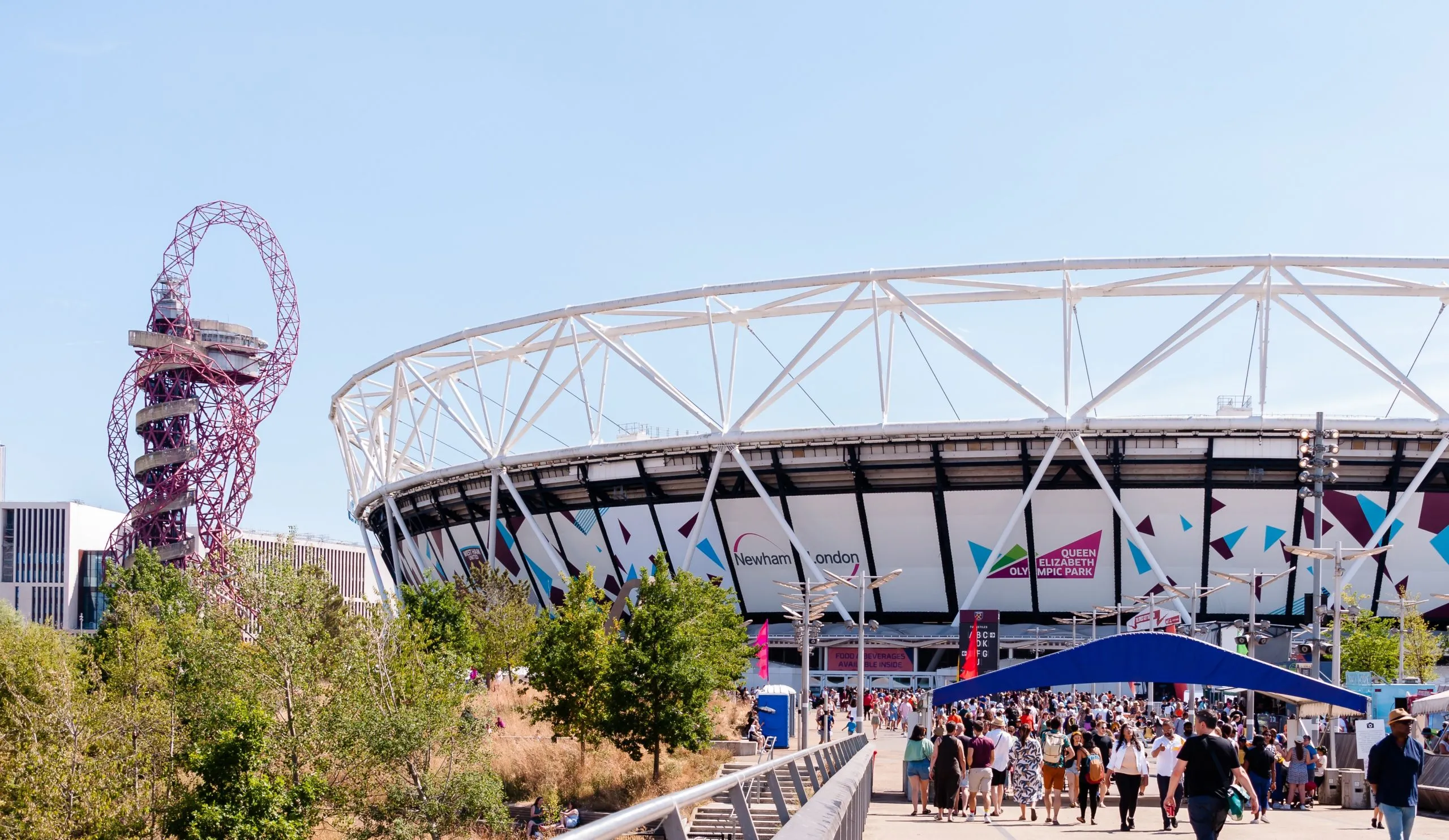
Success story: the former Olympic Stadium in east London now generates around £230m a year
Once completed, the stadium will not exist in a vacuum. This needs to be reflected throughout the planning process. Accounting for shifts in footfall, nearby residential property demand and transport is integral to its success, so viewing different stakeholders across transport, infrastructure, planning and property as part of one larger team, working towards the same goal, means efficiency can be maximised.
Beyond completion
Even when structure completion is reached, the job is far from done. With the increasing frequency of stadiums as mixed-use arenas, preparations are key for each aspect of a stadium’s use. Preparatory ‘ramp-up’ events are fundamental to a project, and the hospitality and matchday experience needs to be considered and tested, and any potential issues identified as early as possible.
The benefits of this approach are evident. For example, the evolution of London Stadium into a multi-use venue has delivered a significant economic return, with official figures showing it now generates around £230m a year for London’s economy, driven by major sporting events, concerts and non-matchday activity.
To achieve this level of benefit for a local community and the wider economy, pre-opening events will help establish any cracks in the system, so they can be identified and amended as early as possible, ensuring the vital buy-in of the local community a stadium’s success relies on. Introducing a mixed-use civic asset into the heart of a local community can provide a swift economic impact. Through consistent community engagement, nearby residents’ needs can be met, keeping them on side in the long run.
Achieving wider community buy-in is ‘non-negotiable’ for stadium construction projects, as it is needed to support operational longevity of the site. The mixed-use element of the property on project completion relies heavily on the support garnered, feeding into the local economy.
Keeping residents at the heart of the project will make them feel anchored to the community purpose of the stadium. Consideration of neighbourhood impacts should be revisited regularly to frame the project for what it can be: a catalyst for property, social activity and employment.
Mark Andrews is managing director, commercial, at Sir Robert McAlpine