 Property Week News, analysis, insight and events for UK property professionals
In the early 1990s, the BBC aired a sitcom called 2point4 Children. The plot revolved around an average family and the title was based on the stereotypical British family unit at the time: mum, dad and 2.4 kids.
 Fast-forward to 2024 and the average mum will have only 1.4 children, according to the Office for National Statistics.
The fact that families are having fewer children is one of the main reasons the UK has an ageing population, alongside advances in medicine, which mean people now live for longer. The latest report from the Centre for Ageing Better reveals that almost one in five, or 11 million, people in England are aged 65 and over, and almost two in five, or 22 million, are aged 50 and above.
As time passes, the population in England is expected to undergo a further shift towards older age groups. By 2065, it is projected that 26% of the population will be aged 65 and over and 46% aged 50 and above.
The situation comes with a whole host of issues, not least how all those extra people are to be supported. But it is also a problem when it comes to housing. Quite simply, too little housing in the UK has been designed with older people in mind. So, how can we boost supply?
On 25 March, property professionals and senior living experts will come together for the Later Living & Care Conference at the Kia Oval in London to discuss the supply problem and other pressing issues facing the sector.
In terms of affordable and publicly funded housing for older people, we’re not building enough
Raina Summerson, Agincare Homes
Raina Summerson, group chief executive at care home provider Agincare Homes Holdings and a speaker at this year’s conference, says there is broad agreement that not enough units are being built, be they affordable or market rent or for sale on the open market.
“I think that we still have not recovered from the slowdown in the Covid pandemic,” she says.
“We’re still sitting with a lot of old stock that will fall out of the market. And although I think registered bed numbers are broadly keeping up, that’s because there are fewer homes and more beds in those homes, but they tend to be for private pay funded.
“So, I think in terms of affordable and publicly funded [housing] for older people, we’re not building enough and we’re at risk over the next few years that, although it’s a more active market now, it’s not catching up enough.”
Costs and viability
Nick Towe, chair of the board of trustees at not-for-profit retirement living operator the ExtraCare Charitable Trust, is also due to speak at the Later Living & Care Conference. He argues that construction cost inflation has made some sites too expensive. “We’re finding projects that would have been viable five years ago are just not viable now, in that the build cost often exceeds the value you can get out of the asset,” he says.
ExtraCare operates a buyback guarantee, where it promises to purchase properties for at least the price they were sold, minus any fees. “Our model works when the market is growing and sales prices are growing,” he says. “If you buy an apartment for, say, £500,000, we might be able to sell it for £600,000. That helps us then reinvest that money into new projects. As things stand, we’ve even got sites where the land is effectively free and where we still can’t make stuff stack up.”
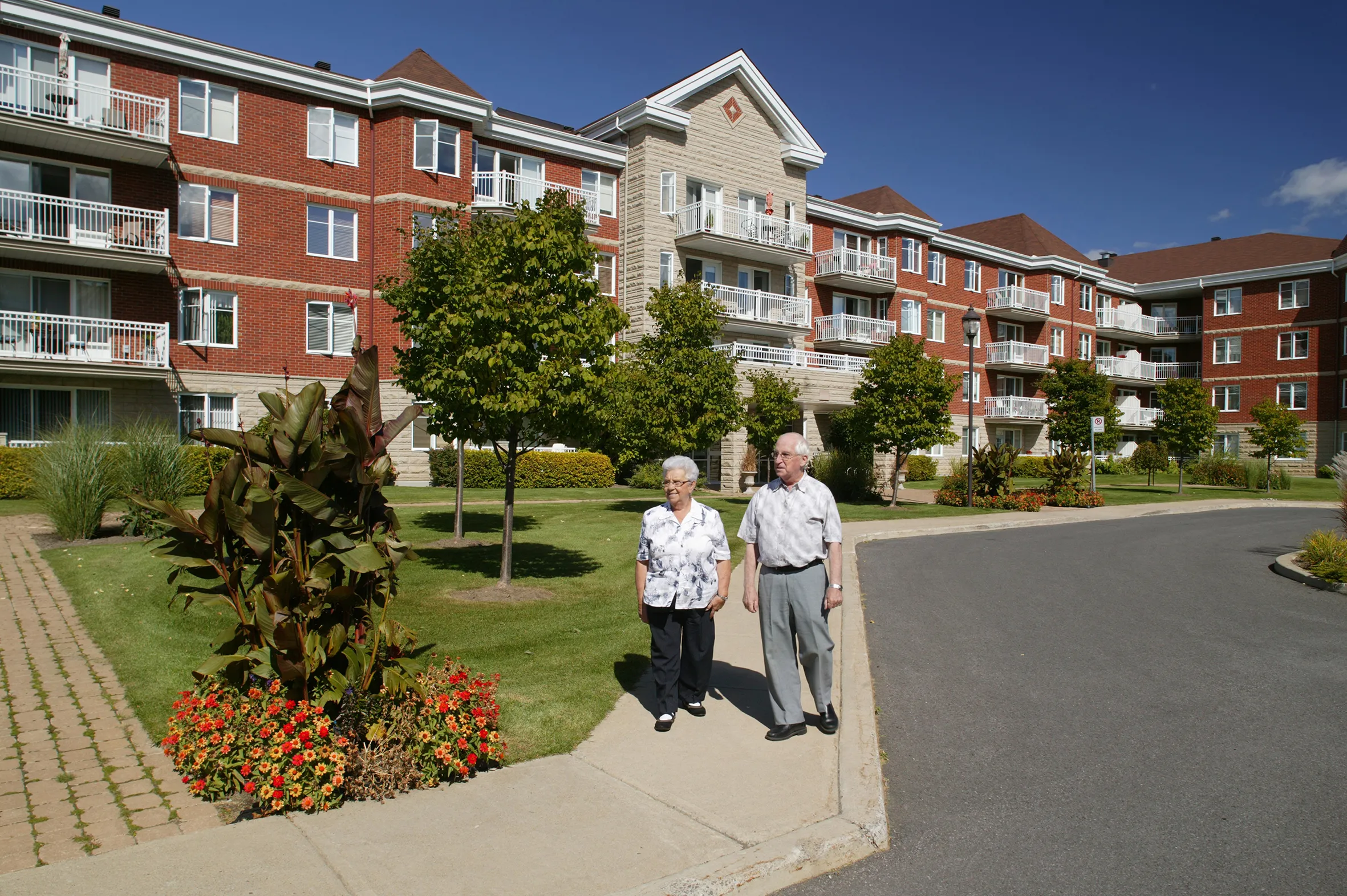
Part of the problem is a lack of awareness, according to fellow conference speaker Nick Sanderson, chief executive of later-living developer Audley Group.
“There’s still a great lack of awareness of later-living accommodation as an option,” says Sanderson. “If you’re in New Zealand or Florida, it’s a given that you would downsize and move into some sort of more specialist accommodation. It doesn’t really happen
here and that’s partly because people aren’t aware of it.”
This is something of a chicken-and-egg scenario. People aren’t aware of later-living accommodation because there isn’t enough of it, but demand won’t increase substantially until there is more of it.
“It is very frustrating,” says Sanderson. “If you see it on a micro basis in the locations where we operate, it’s hugely popular and successful. And we’ve got villages now that are 25 years old and, frankly, if you wanted to buy a secondhand property then you’d have to join a queue.”
Leasehold reform
The government’s desire to change the leasehold system to commonhold, whereby residents effectively share the freehold of a building, isn’t helpful either.
“Leasehold reform has been a major concern for us,” says Towe. “All our apartments are leasehold, so they get caught by leasehold reform in that when we come to resell, we are not sure yet whether or not we will be able to issue new leases because we will have to move to commonhold.”
There is also a problem with the proposed caps on service charges and ground rents, he adds. “That raises a big question as to how we generate the income to maintain the buildings,” he says. “If things are up in the air, we can’t necessarily resell as quickly, so we end up with the voids. We have significant financial reserves to cover that, but normally those reserves would be used to seed the funding for new developments.”
There’s still a great lack of awareness of later-living accommodation as an option
Nick Sanderson, Audley Group
Part of the solution could be to include housing for older people in large-scale housing projects, something that is currently rare. “If you look at large-scale development of any kind, there is a lack of commitment to part of it being for our category,” says Sanderson.
“I shouldn’t have to persuade developers it’s a good idea for us to be part of their scheme.”
 However, Sanderson doesn’t believe volume housebuilders will change of their own volition. “The whole housebuilding industry is pretty dysfunctional,” he says. “It’s dominated by five major companies that build nearly two thirds of all houses. They don’t have any compulsion to recognise that 25% of the population are over 65 and need housing solutions. It won’t happen because they don’t need to change.”
Of course, local planning authorities have the ability to encourage housing for older people through local plans, but very few actually have policies in place. “When you go to them, you’ll find they’ve got no policy, no strategy about housing older people at all,” says Sanderson. “They’ll have everything from key worker housing to affordable housing to social needs housing, but nothing specifically around older people.”
As a result, proponents of the sector believe changes need to be made to the National Planning Policy Framework (NPPF). “The NPPF does have reference to [catering for older people], but I don’t think it’s enough to be a ‘nice to have’,” says Sanderson. “I think they’re going to have to be compelled. You probably need to accelerate that to: ‘You must include this.’ Think about the new towns. How could you build a new town without properly reflecting the balance of the national community?
In addition, Sanderson wants to see greater regulation of the sector, not least to prevent instances of mis-selling that so often grace the media. “What really kicked it off in New Zealand was the government’s recognition that this was something they wanted to support and encourage, so they introduced legislation,” he says. “The Retirement Villages Act [2003] governs these forms of tenure, the commitment to services, the quality of those services and so on. That really made it a safe place to go. You need to have that better regulation.”
Later Living & Care Conference
 The Later Living & Care Conference is a one-day event organised by Property Week, designed for professionals across the later living, retirement living, senior housing and care sectors. It provides a platform for operators, developers, investors, policymakers and innovators to share insights, explore trends and discuss strategies for growth, innovation and quality in later living and care.
The conference will take place on 25 March 2026 at the Kia Oval in London.
Speakers this year include Lord Best, a cross-bench peer with specialist knowledge of later living; Tom Copley, deputy mayor of London for housing and residential development; and Helen Jones, chief executive of Allegra Care.
Click here for more information about the Later Living & Care Conference