 Property Week News, analysis, insight and events for UK property professionals
The UK’s commercial and residential real estate sector continues to face significant challenges, including uncertainty around new environmental regulations and difficulties accessing affordable finance.

Nicola Haigh, national head of real estate and housing, Lloyds Business & Commercial

Saad Malik, lending commercialisation director, Lloyds Business & Commercial
For Lloyds, the increasingly complex market environment makes it more important than ever to demonstrate to clients and prospective clients that they are ready to support commercial developers with their more sophisticated requirements.
National head of real estate and housing Nicola Haigh and lending commercialisation director Saad Malik are continually developing Lloyds’ offer for the SME market. That includes adapting products such as Lloyds’ Buildings Transition Loan, which now incentivises clients to commit to retrofitting properties rated Energy Performance Certificate (EPC) ‘C’ to ‘G’ to at least EPC ‘B’ within an agreed timeframe. Qualifying properties receive £0 arrangement fee loans.
Their focus is primarily on investment clients looking for up to £20m of lending and development clients looking for up to £10m, across residential and commercial. This can range from those who own a couple of buildings to those delivering 100-plus homes a year.
As the sector awaits clarity from the government on key areas such as Minimum Energy Efficiency Standards and the new EPC assessment methodology, Property Week speaks to Haigh and Malik to discuss this crucial segment of the market.
Retrofit is a key part of the drive to net zero. What standout retrofit projects have you seen recently?
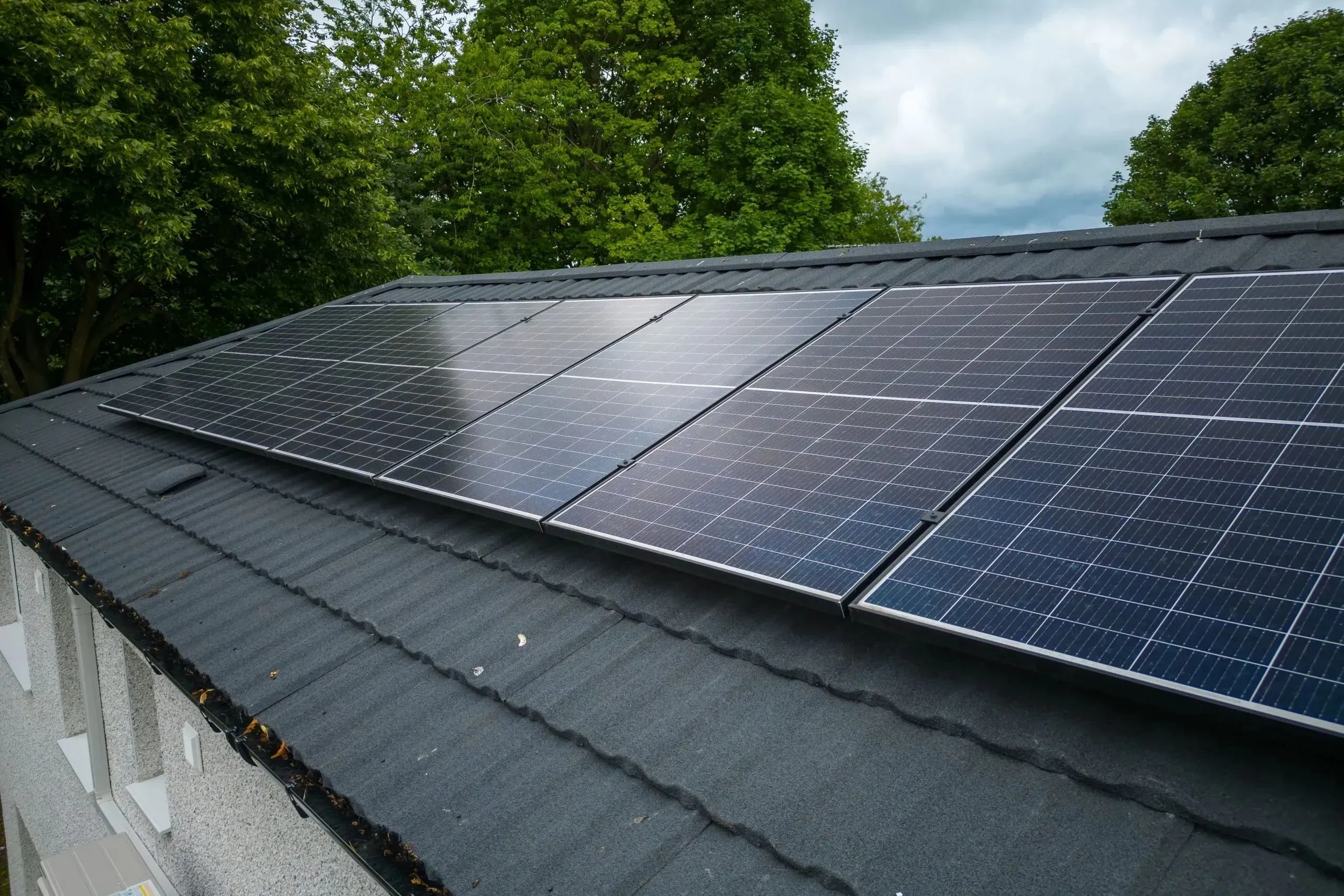
NH: We support so many clients in this space, but one recent project that stands out was delivered by a London-based developer, which specialises in renewable technology. On this project, they used 34 solar PV panels on the roofs to provide energy for two commercial units and 17 private residential units. As well as meeting a high energy performance standard, the developer put in a supermarket and a gym to create a community feel. It also has a strong commitment to improving biodiversity around its properties and added green roofs and wooden and stone piles to create diverse habitats for birds and insects.
Our Buildings Transition Loan really helped accelerate our client’s thinking on that path, both through conversations with our relationship team and the financial support we provided through their arrangement fee-free financing.
What lessons can the industry learn from such examples, and is it getting any easier to balance cost efficiency with sustainability goals?
NH: Case studies are a powerful way of showing our customers what other businesses like theirs are achieving. Those that embrace the transition earlier also have the chance to make their properties much more attractive in the market. The great thing is that technology is becoming more accessible and affordable and is now much more tried and tested. Clients feel more confident about it and we are seeing that in the uptake of our sustainable financing.
Our models allow us to effectively assume that the fee – usually around 1% – has been paid, so the client still gets the return on it. When businesses save a large element of the financing cost, they can redeploy that to make their buildings more sustainable.
Do you think upcoming EPC changes will accelerate or hinder investment in property development and retrofit projects?
NH: Regulation clearly still has a role to play, because it does drive innovation. A great positive step was the recent release of the government’s Warm Homes Plan and the Fuel Poverty Strategy. When there are changes, clients have to respond. I think further work on how we keep moving forward as an industry will only help bring further interest, innovation and curiosity. It keeps net zero front and centre.
 SM: We have shown we can be agile in our response to what is going on in the market, such as making two changes to the Buildings Transition Loan since we launched in May 2024. The Warm Homes Plan and Fuel Poverty Strategy are an important step and as we learn more we will make sure our offerings are structured so that we can support our customers through these changes.
If you could influence one policy change to unlock progress in this space, what would it be and why?
NH: Greater transparency and clarity for the path of energy efficiency regulation for our clients and a common goal that everyone is working towards. At the same time, we have to be mindful of the housing access challenge within the market. We have to ensure we are helping support existing stock as well as getting it to a good quality.
SM: Businesses are inherently innovative, but they do need clarity on what the regulatory horizon looks like so they can plan with certainty. Changes to implementation dates and roadmaps give rise to scepticism and a wait-and-see attitude. Sometimes uncertainty is worse than bad news.
What are the main barriers preventing developers from accessing finance?
SM: High upfront costs and uncertain payback. Getting properties to a higher energy efficiency standard comes at a premium and businesses want to make sure there is a return. We have learned from our research and partnerships that the payback period can be attractive for many buildings, although not for all. That information needs to be more readily available so that people can make an assessment and move ahead of the regulations.
There is also the issue of ‘split incentives’: the perception among landlords that the benefits of improving the quality and energy efficiency of a building flow to the tenant, while the costs sit with them. The latest research rebuffs that. It shows that investment can lead to rental and capital value improvements and higher occupancy rates. Lloyds is making it even more cost effective by offering discounts.
What else can Lloyds do to support businesses to navigate these?
SM: There is a dynamic political landscape that we need to be mindful of, but we also need to make sure businesses know there is a cost to waiting and that future-proofing early is valuable. The cost of improving a building from an EPC ‘C’ or ‘D’ to a ‘B’ today will likely shoot up if regulation shifts to bring improvements forward. It is simple demand and supply.
As financial providers, we need to be better in terms of assessing and meeting the capital needs of businesses, whether they are looking for more financial flexibility, to free up capital or to get additional support to make the changes that will help them make long-term decisions. That is what we are working on.
Are innovative finance models emerging to bridge the gap for sustainability-focused projects?
SM: Yes, there is a lot going on including transition-linked financing models, integration of ESG metrics in credit and pricing models, vendor partnerships, heating subscription models and tools to enhance customer knowledge such as our Green Buildings Tool. As we introduce new products and offerings, our real estate and housing team is constantly upskilling so that customers can use them for long-term benefit.
NH: Another area we are involved in is public-private partnerships, where we partner with government institutions to unlock innovative financial solutions. That can be for new, highly energy-efficient homes or retrofitting existing homes to improve energy efficiency. We are all working towards a common goal.
About Lloyds
 Lloyds provides specialist lending and banking support for property investors and developers across the UK. With a national network of relationship managers, we offer tailored funding solutions designed around your commercial ambitions and sustainability goals. Our sector experts combine deep sector knowledge with practical insight to help you finance your next project, strengthen your portfolio and build more sustainably.