 Property Week News, analysis, insight and events for UK property professionals
The UK government’s growth agenda perhaps provides a welcome tonic amid the challenges real estate faces. It suggests we are moving in a more ambitious direction towards greater investment in housing, infrastructure and other important areas, and is underpinned by a commitment to cutting red tape, speeding up development and hopefully promoting market stability. With a stated aim of accelerating clean energy projects and other infrastructure by at least a year, this pro-growth agenda may support a renaissance in UK development.

Imogen Thompson
But at the same time, the global geopolitical situation is casting a long shadow of uncertainty over the economic growth targets of both the UK and Europe. Against this backdrop, what are the likely challenges and opportunities for real estate investment and development?
‘Survive until ‘25’, a common phrase among Urban Land Institute (ULI) leaders, is quickly shifting to ‘stay in the mix until ‘26’. Should we ‘keep calm and carry on’ or do current challenges mean we need to shift our thinking about real estate, regardless of appetite from stakeholders to deliver on government targets? The topic will be a major focus of ULI’s Europe Conference in London next month.
The most recent ‘Emerging Trends in Real Estate Global Outlook’ report by ULI and PwC reveals an industry braced for continued uncertainty, with 85% of European real estate leader respondents citing international political instability as their biggest concern. US tariff policies and broader global geopolitical shifts are certainly reshaping confidence and transactions across the global investment landscape.
The escalation of global conflicts and sluggish economic growth are respondents’ second and third main concerns, cited by 83% and 77% respectively. Other issues cited include increased regulation, construction costs and cybersecurity.
Respondents expect factors such as geopolitical instability to contribute to sustained inflation and higher interest rates, at least in some parts of Europe. It is clear that the real estate industry will continue to be affected by challenging circumstances for some time yet, with uncertainty and complexity the new state of play.
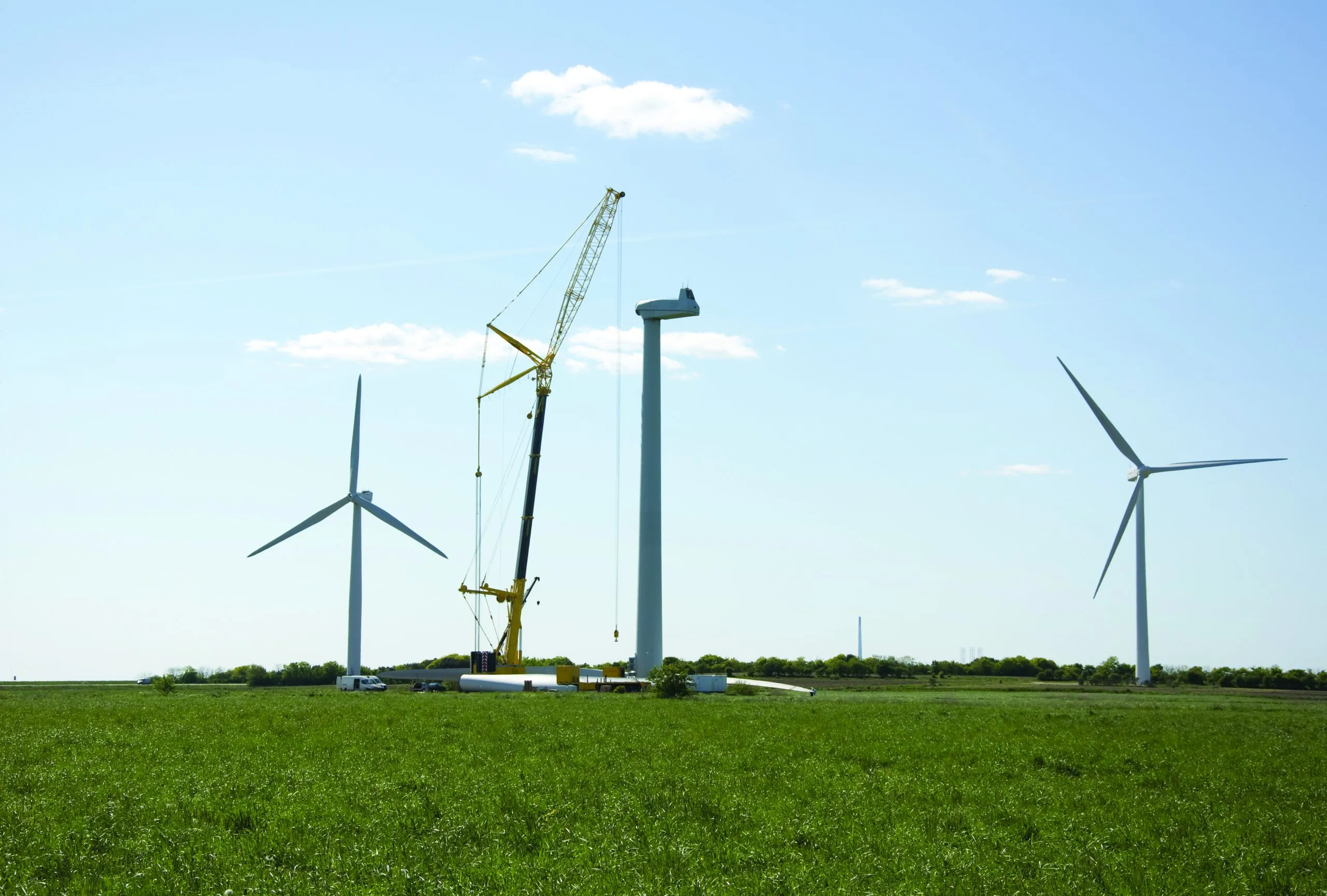
Powering ahead: clean energy and infrastructure projects have growth potential Credit: Shutterstock / Jezper
Conversely, despite rampant uncertainties cited by many market leaders, the report also reveals optimism that the global industry in 2025-26 may break through to a ‘reset point’ or start a new cycle of normality. Across Europe, the ‘beds and sheds’ sectors continue their upward trajectory, with hospitality sector volumes also up year on year. Many believe greater alignment on pricing could support more deals, with sector preferences likely to follow last year’s.
An element of tacit optimism in the report is the view that alternative sectors are surpassing most categories in terms of investment appetite, from core to opportunistic, with logistics, data centres and new energy infrastructure attracting record interest. This mirrors the growing importance of energy security, AI-driven real estate demand and regional economic independence.
This brings us back to the UK’s growth agenda and ambition to accelerate housing development, infrastructure and clean energy projects to unlock investment, improve living standards and boost the economy. Many of these sectors offer investors a real and attractive opportunity, despite geopolitical headwinds. But the turbulence and uncertainty facing the industry seem enough to have held back the pace of early 2025 deals and investment to lower-than-expected levels.
With growth on the agenda for the UK, key industry voices agree there are opportunities ahead, but we need to stay the course for at least another few quarters in the hope that the industry will recover sooner than that.
Imogen Thompson is executive director of the Urban Land Institute UK