 Property Week News, analysis, insight and events for UK property professionals
Central London offices commanded record-breaking rents in 2025. They also pulled in global capital and supported the UK’s most productive industries.

Bradley Baker is chief executive of CO-RE
We must recognise that high-end offices are not just a luxury; they are foundational to the UK’s global competitiveness.
Cranes have long been seen as a symbol of growth. A changing skyline becomes a city’s visual proof of success, embodying confidence, ambition and the constant promise of yet more to come. But buildings – particularly workspace – should not be seen as a symptom of economic growth. Instead, they are its engine.
According to MSCI, London is projected to add around 186,000 office-based jobs over the next five years, far more than Paris (51,500), Amsterdam (30,600) or Frankfurt (3,800). Offices are not only simply where these jobs will take place, but are a tool for companies looking to attract the best people.
The talent war has heated up in recent years, particularly in the legal and financial sectors, where British and US firms in London are vying to attract top-tier professionals. Workspace design and amenities are a key part of their offer.
High-quality workspace is therefore critical to the success of the largely office-based industries that predominantly drive economic growth. The legal, finance and other professional services that make up the services sector contribute roughly 80% of British GDP.
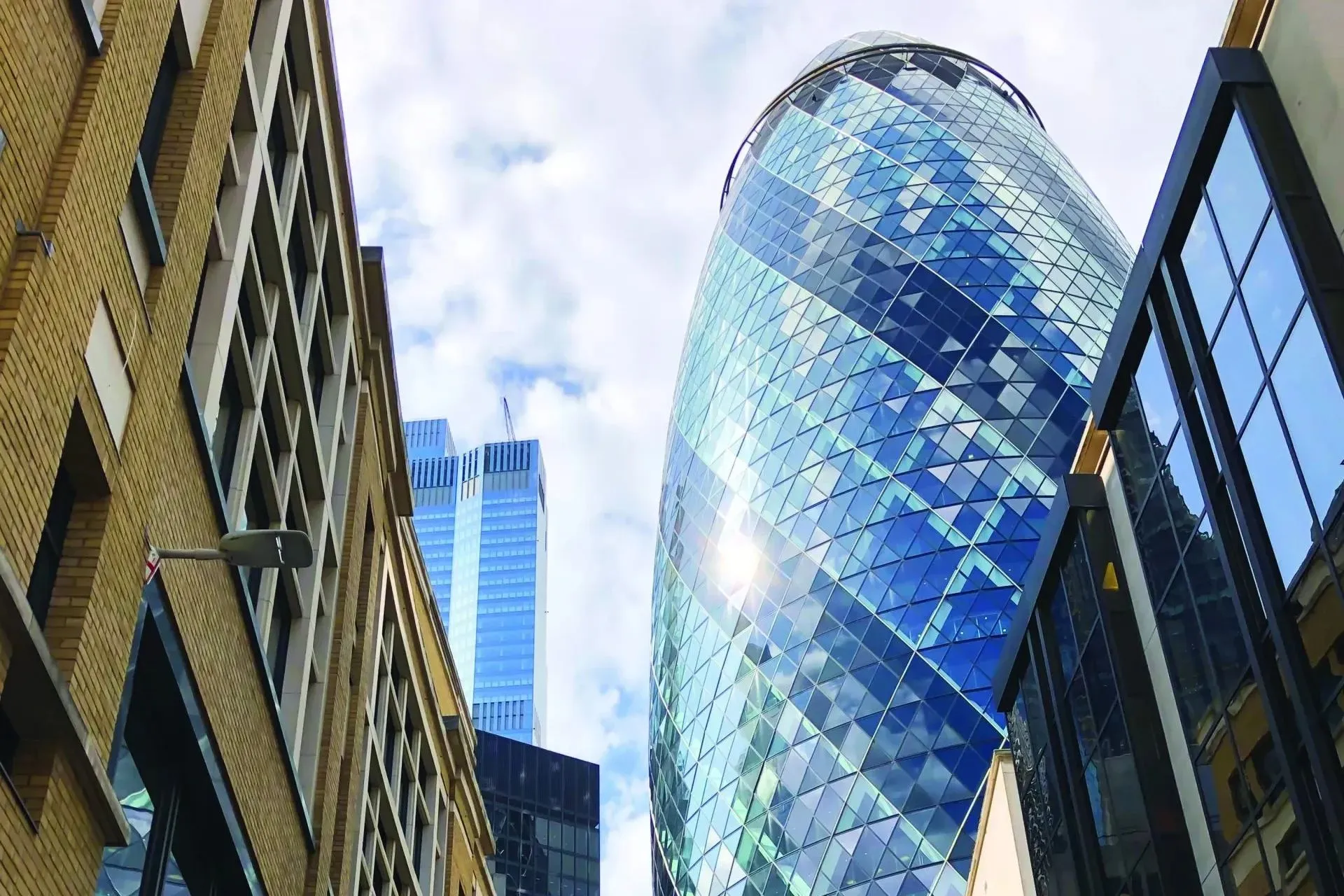
High values: occupiers will pay a premium for a standout address such as the Gherkin
But office space in London is in short supply. Resilient business infrastructure, a metric including the quality and availability of modern office space, is a key factor the City of London uses in benchmarking against other global financial centres. This year, it notes that competition for high-quality offices has driven vacancy rates down across London. Knight Frank recently told the Financial Times that it projected vacancy rates for the highest-quality office space would fall to zero by 2028 and remain there through 2029.
Demand is stronger than ever and, as a result, rents across London are surging for the best space in the best locations. The fact that occupiers will pay a premium demonstrates that they understand the power of a building in representing a company’s brand. This is nothing new – my two favourite examples being the Chrysler Building in New York and Swiss Re’s Gherkin in London.
War for talent
As the war for talent continues to drive office demand, investors are taking note. Offices recorded the largest full-year rises in investment volumes among the major sectors in 2025, up 31%, according to JLL. The agency forecasts that in 2026, offices will attract up to £15bn of investment, with £10bn to £12bn expected to flow into central London alone.
It is the nature of this industry that supply often trails demand, constrained by the time required to plan, design and deliver high-quality offices. That lag creates a clear opening for investors and developers who had the confidence and foresight to keep building in recent years and will bring the right product to market soon. Recently, we have let significant completed buildings to Linklaters and Travers Smith, both prior to practical completion, following the decision to push ahead with building when others might have considered it risky to do so.
The task now is to build on the momentum seen across the market. Only by continuing to offer the best workspace can the capital continue to support the businesses that operate in it. It is our industry’s role to ensure that the built environment does not solely react to economic shifts, but anticipates them – and to lay the foundations for the economy to grow, where and when it needs to.
Bradley Baker is chief executive of CO-RE